A business opening, expansion, relocation, or temporary site can reach its operating date before a conventional fiber build reaches the building. That gap creates an operational decision: wait, change the project schedule, accept a short term connection that may not meet the need, or evaluate another business connectivity path.
The useful question is not whether fiber or fixed wireless is better in general. The useful question is which option fits this address, this deadline, and the work the connection must support.
Separate the business deadline from the provider estimate. Record the date the location must support employees, customers, phones, payments, cameras, cloud systems, or field operations. Then ask each provider which dependencies stand between today and a working circuit.
Those dependencies may include construction, permits, access to building pathways, landlord approval, utility coordination, equipment, rooftop access, or a site survey. The list matters more than a general promise that service will arrive quickly.
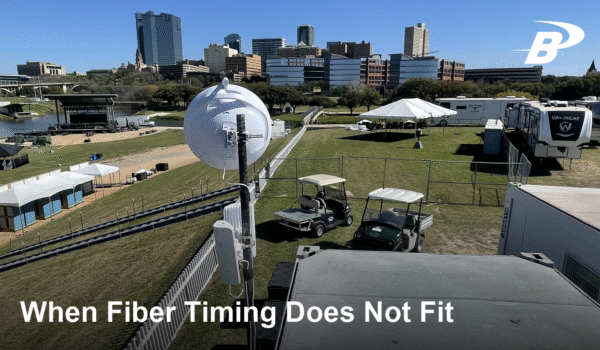
Business fixed wireless connects a fixed location to a provider network through terrestrial radio equipment. The Federal Communications Commission classifies terrestrial fixed wireless separately from satellite service and from fiber to the premises. A typical installation places equipment at the customer location and connects it to a provider point through an engineered wireless path.
That distinction matters because buyers sometimes hear wireless and assume a mobile hotspot, consumer cellular plan, satellite link, or office Wi Fi. Those services solve different problems. A provider should explain the proposed connection, spectrum approach, site equipment, service characteristics, and operating responsibilities for the specific location.
Define the operational deadline and the systems that depend on connectivity. A small temporary office has a different requirement from a public venue, healthcare facility, industrial site, or multi location operation.
A broad service area does not prove that a specific building can receive service. The provider must review the address, nearby network access, path conditions, capacity, and any location specific limits.
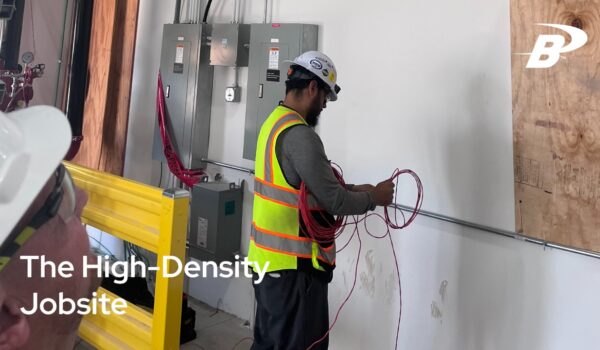
Confirm roof or exterior access, mounting options, power, internal cabling, equipment space, building rules, landlord approval, and any safety or scheduling constraints. A technically viable path still depends on the site being ready.
Document bandwidth, traffic patterns, latency sensitivity, cloud and voice use, remote access, security requirements, monitoring expectations, and the consequence of an interruption. Ask the provider to connect each requirement to the proposed service rather than relying on a single speed number.
Decide whether the service should be the primary connection, bridge the period before fiber is ready, support a temporary operation, or remain as a backup after another circuit arrives. The answer changes the implementation, contract, cutover, and long term network plan.
New location or expansion. The permanent connectivity plan may be sound, but its delivery date misses the date people, systems, or customers need the location. An interim connection can be evaluated alongside the permanent plan.
Temporary operation. Construction sites, project offices, event environments, and phased openings may need connectivity for a defined period. The design should account for how the site will change and how the temporary equipment will be removed or reassigned.
Difficult location. The building may lack suitable carrier facilities or sit beyond an easy extension of existing infrastructure. A provider must evaluate the address and site conditions before recommending a path.
An urgent installation can solve today’s schedule problem while creating tomorrow’s operational or contractual problem. Before selecting an interim service, decide what happens when the planned fiber connection becomes available. The organization may retire the interim circuit, keep it as a backup, or redesign the two services as part of a broader continuity plan. Document the decision before signing so procurement, IT, facilities, and the provider share the same expectation.
BelWave offers business connectivity options in North Texas, including fixed wireless and fiber where available. Bring the address, required date, and operating requirements to a consultation. The team can review serviceability, site conditions, and the role the connection should play before recommending a next step.
Can fixed wireless replace fiber?
Sometimes, but the answer depends on the location and the operating requirements. It may also serve as an interim or backup connection. Compare the proposed services rather than assuming one technology must replace the other.
Is business fixed wireless the same as satellite or a mobile hotspot?
No. The FCC treats terrestrial fixed wireless, satellite, fiber, cable, and other access technologies as distinct categories. Ask the provider to explain the specific connection and equipment proposed for the site.
Does fixed wireless require line of sight?
Path conditions matter for many fixed wireless designs. The provider should evaluate the address and proposed link rather than asking the buyer to determine feasibility alone.
How quickly can service be installed?
Timing depends on serviceability, site access, equipment, approvals, internal cabling, power, and the scope of work. Ask for the dependencies and owner of each step before relying on a date.
What happens when the fiber circuit arrives?
Decide that before the interim connection is ordered. The service may be removed, retained as backup, or incorporated into a broader network design, subject to the contract and technical plan.